Sunday, August 14, 2011

Sometimes things happen . . . . . . . . . .

These are some of the vegetables that were just plucked from the garden this morning.


Sometimes things happen way far beyond than what you expect it to be.

I mean we came down to Spain to stay with Nalini, an old friend of ours who said that she will take us to this place on Monday and the next day we will go to that place..... in short she and her kids had planned a lot for the eight day stay that we were going to have in La Adrada which is a cute little small villlage about 90 kms from Madrid.

From the day we came I noticed that she was not in a good form physically to play the host that she intended to be. When I greeted her with a kiss she warned me "careful Joe, don´t hold me so tight I am in pain"

Cutting a long story short she just passed away on the third day of our arrival.

I remember many years ago, when she had been to our place in India and said that she missed having a piano to practice her lessons, I offered her the small casio player that I had with me. It was nothing compared to the grand piano she had at home, but she did use it. When she realised that I was musically inclined, she even taught me how to read the musical notes (something I did not pursue which I regret now)

In this age of e mails and computers she wrote a three page hand written letter to us when she got back to Spain.

Well, after I saw the vegetables that were plucked in the morning by her daughter, I took my camera and went out into the garden where Nalini did her gardening.

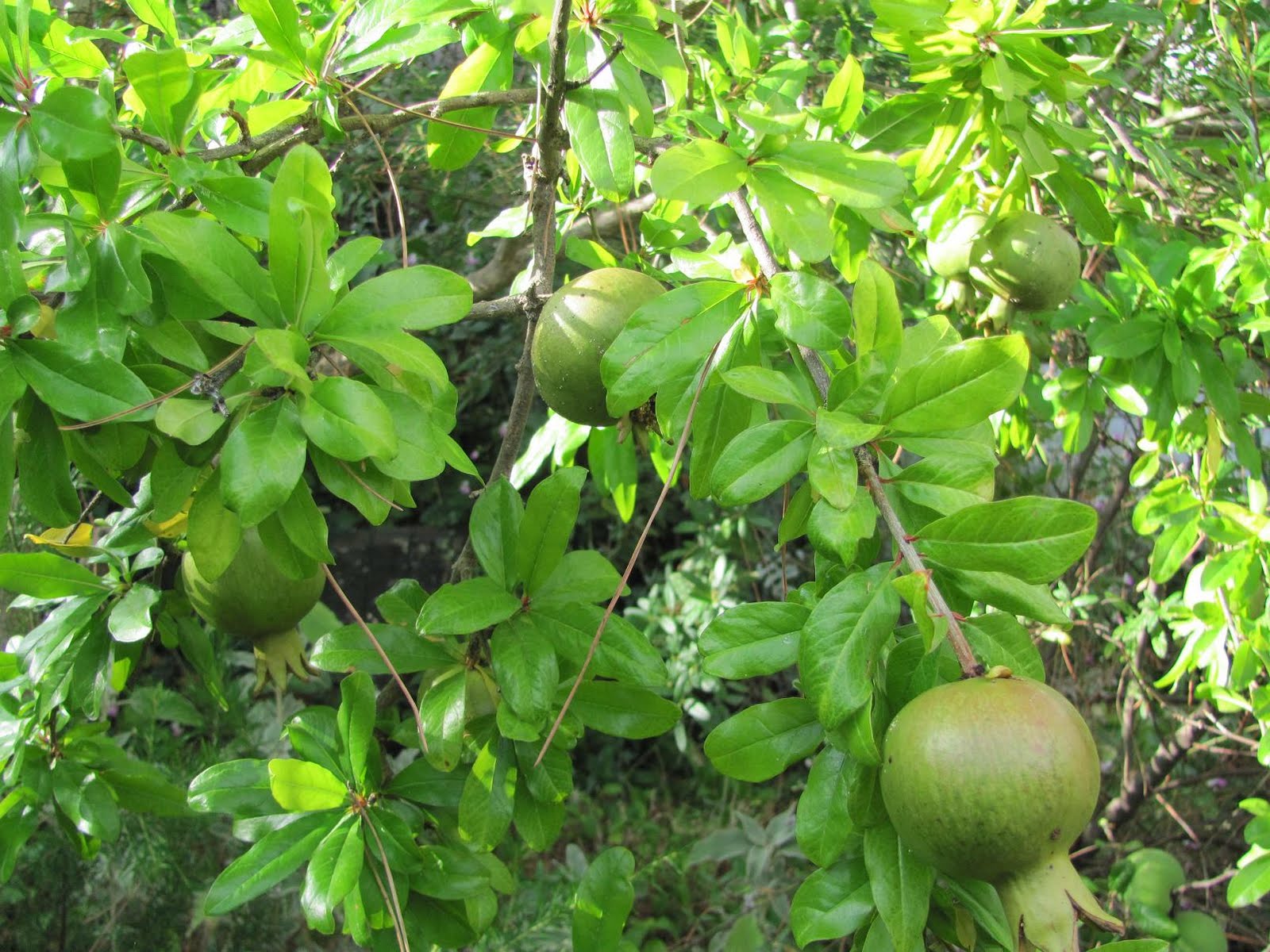
The figs, pomegranate and apples were not yet ready to be plucked.


Some of the vegetables that she grew:


She probably intended to pluck and cook these herself for us.


and the flowers:


Her daughter showing us around the garden:


The small car that she drove for about a decade.


The gentleman in the village from whose shop Nalini bought most of her provisions. He had a lot of stories to narrate about Nalini. In fact many whom we met in the village had something to say about her as she was a "mother and a good friend" to many.


She was so artistically inclined that most of the things in the house were created by her.

Her painting.


The stuffed toys that she made for her grand daughter.


The crib that she made by cutting perspex sheet (and that too by filing each image with a file and not by a cutting machine)


She used to jot down some of the sayings that she liked.


One entry:
"We meet to create memories and depart to preserve them"


Probably the last entry by Nalini :

One of the entries "There may be times we can´t find help when we need it, but there is never a time we can´t give it"

(note that number four was yet to be entered)

Her house was always open for those who seek warmth, love and happiness........


A beautiful service was held in the church before the funeral.

Preparing for the readings in the church (both in English and Spanish)

The children . . . .  . . .  . .  a moment of grief:

After the funeral, the ashes were brought home last night. (while clicking this, my camera had a very bad fall, but miraculously it is still working)


I hope to write more posts about La Adrada and the other surrounding villages once I am back in India.

Am trying to string up the videos that I shot in the church and once that is done, I will attach it to this post later.

I am sure Nalini wanted us to have a good time in La Adrada and I intend to take back good memories from here.

I love looking at old photographs, especially when it is in black and white.
This one was clicked during Nalini´s engagement, way back in 1974.


And this was clicked about seven years ago when she visited us in Pune.


Sunday, July 24, 2011

many firsts

Many firsts in this post.
Like, this is the first time a blog post is written by me  from a country outside India.
And this is the first time I am on a foreign tour and technically speaking I will be visiting 5 countries in one go.
Just a few photographs for the time being, as I intend to see places and click click click than spend time typing away on the keyboard.
On the flight there were some school kids who were going to Copenhagen Denmark, to take part in a football match (under 19)

They were very excited about the whole thing and was making the best of it in the flight as well as at the airport.
I had a chat with the coach and he said that there were 60 teams taking part and these kids are from different schools in Mumbai. This is organised by a club and I feel this must be really encouraging for these kids. Wish there were more such orpganisations to boost the school kids.
Some pics of the kids in the aircraft and at the Vienna airport.

Clicked some more pics at the Vienna airport as I had to kill two hrs.   


And at the Amsterdam airport I saw two cars , and what a contrast between the two. But each has their own value I suppose, old or new.


So hope to get lots of photographs to write more posts as I intend to cover Amsterdam, Antwerp, Bruggs, Paris, Amiens, Normandy, Madrid and Vienna in 27 days.

Friday, June 17, 2011

A quick trip to Kerala

Had been to Kerala (South India) to attend a funeral.


Getting tickets at short notice is a big hurdle (and it gets compounded if it is holiday season)

Finally managed to get a direct flight from Mumbai to Calicut. (Kozhikode) From there proceeded to Kanoor by road (a three hour journey)


This is my first trip to the northern part of Kerala and even though I was concentrating on the fact that I should reach my destination before the burial takes place, I couldn’t help notice that this part of Kerala is really beautiful. I wonder why there is no development as far as tourism is concerned.

The drive was almost along the sea coast and it was so beautiful with the high waves on the left side and lush green trees on the right side (especially from Thalaserry to Kanoor)

Due to some traffic jam in the city side (locally known as “block”) we had to finally drive straight to the cemetery.

Some times things don’t happen the way we plan it.

For a long time Tomy (my cousin who expired) had been calling me to visit him from the time he moved to Kanoor. I kept postponing the visit as it was almost eight hours from Cochin by train. Just last month I was planning to make a trip to Bangalore and drive down from there to Kanoor to meet Tomy and his family, but due to some reason I shelved that too.
The last time I met Tomy was when he called on me 9 years ago at Alleppey.

I don’t click pictures of the deceased as I like to remember them as they were when they were hale and hearty.

Tomy was buried in the same tomb where his mother was buried.

This is his mother’s cross which was removed temporarily to lower his casket.


Had to get back to Cochin as our return flight was from Cochin to Mumbai. Some of the family members were going back the same day to Alleppey (Alepuzha) by the overnight train. No reservations, no berths. So we too just purchased tickets and hopped into the unreserved compartment. Managed a few winks in the 8 hour journey (that is when we got place to sit after standing for an hour)

What a contrast between the night travel in the unreserved compartment


. . . ......... and the morning travel by flight.
The next day I freshened up at my uncle’s place at Alleppey and left for Thiruvella to meet one of my aunts who is in an old age home.


Was she happy to see me? She scolded me for not sending her the Birthday card which I used to send religiously for the last 20 years. I apologized and told her that I will be sending the Xmas card followed by the B’day card (her B’day is on Jan 1st) She told me that Onam is a big celebration in Kerala. I got the hint. So it will be Onam, Xmas and B’day card from now on. Maybe I can add one at Diwali time too.
(the problem is that I cannot write Malayalam and she cannot read English. So I make up by sending colourful and flowery cards with a few broken sentences in Malayalam)


From there proceeded to Cochin via Kottayam meeting more relatives on the way.

The view along the way was great with some places posing a challenge with water from the nearby paddy fields overflowing on to the road, but our driver was very cool and drove through.

And then there are these roadside shops selling fresh vegetables and fruits.

At Cochin we had a feast on the Chakka and Manga (Jackfruit and Mangoes) Unusually the Jackfruit were plenty this time on this tree and it was being liberally distributed to all those who came home.


Noticed that most of the coconut trees had coconuts which had surpassed their plucking time. What I gathered was that the specialists who climbed the tree are demanding high labour charges (something like Rs 25 + 2 free coconuts per tree) which makes it a costly affair. But on the flip side, leaving them on the tree is a potential safety hazard too.


Got to drink Chambanga wine , the best wine I have ever tasted. (Chambanga is Rose Apple)


Sebu uncle, who made the Chambanga wine was good enough to pluck some nice raw mangoes for us to take back home.

One of the delicacies that was served to us was the Karimeen. I was impressed by the way each fish was meticulously cleaned and cut and had to click it before it went into the curry pot.

Got to see more realtives along the way.


To end on a colourful note, there were these umbrellas  displayed at the Cochin airport.


Thursday, April 28, 2011

Excitement of the Vanilla order

Some of you may be familiar with this picture (this greenery did appear in the post on the Red Vented Bulbul)

And this one was with the post of the Scaly Breasted Munia.


You can see the Munia making a dash for her nest at the bottom left of the above picture
 
But this time I am excited about that long leaf that you see in the above pictures.
Yes I am excited about the Vanilla that we grew along with the money plant.


This story starts about 3 years ago when we got two cuttings (about a meter long) one from Palai and the other from Cochin (Kerala)
I vaguely remember someone mentioning at that time that they will start flowering only after 3 years and about the fact that natural pollination will not take place.
So we just planted it along with our money plant and forgot about it.

Right enough, about three and half years later we found clusters of flower buds coming up at some specific locations.

Oh ….. . . lot of excitement. It is flowering, it is finally flowering, but what next?


So I logged on to the net and read about Vanilla pollination.
Came up with some interesting facts.
In 1518, while the Spanish Conquistador Cortez was seeking the treasures of the New World, he observed the Aztec emperor Montezuma enjoying a royal beverage of Vanilla scented chocolate. He was so impressed by this kingly drink that when he and his men returned to Europe, they took bags of cocoa and Vanilla along with the gold, silver and jewels of Montezuma's fallen empire.

For more than 300 years after its discovery by Cortez, Vanilla was produced only in its native Mexico.


Plantings were tried in many countries, but the delicate orchid never bore fruit. The mystery was not solved until 1836, when a Belgian named Charles Morren found that common insects cannot pollinate the Vanilla orchid. He observed that a tiny bee, the Melipone, which is found only in the Vanilla districts of Mexico, is uniquely equipped to bring the plant to fertilization. The bee did not survive outside Mexico.


At Madagascar's coast a former slave named Edmond Albius observed these bees very carefully and he perfected a quick and simple method of hand-pollinating which is still used to this day.
Individual flowers are to be pollinated early in the morning as soon as it opens up.


A small stick of bamboo or a toothpick is used to pollinate.


The rostellum is pushed aside and the pollen is spread from the stamen to the stigma causing contact between the two.


Once pollination takes place the flower dries but remains on the cluster. Then slowly the thin stalk behind the flower becomes thick and turns into the pod.


If the pollination is unsuccessful, the flower falls off the next day.


I read some more from different sites and watched some videos related to this and gingerly took my next step of pollination.

But the flowers were falling off……..


O ho, that is bad news. Tried for some more days but flowers kept falling off.


What is going wrong?

Went back to the net and read some more. Then I saw a video (a very badly made video by some amateur) but in that badly made video I got to see what I was doing wrong.


Both the stamen and the stigma has a small flap which has to be held open while pollinating. It was a difficult task as both the stamen and the stigma are on the same flower. Holding them and juggling the toothpick with care to be taken that the flower is not damaged in the process was a delicate task.


So I tried the new tactic and hey the flowers are not falling. In fact I some how got the vague feeling that the flowers were smiling at me.


Yahoo…… success…… the flowers are getting pollinated. (Cortez would have been proud of me)


I see now that the stalks behind the dried flowers are getting fleshy and long and developing into beans.

So we wait for the next step.

The bean stays on the vine for two months to reach its mature length before it produces any seeds, and will continue to grow on the vine for another six months until the base end of the pod begins to turn yellow. The bean is then harvested, blanched and sun dried over another two to three months, then the final conditioning stage will take up to three months before it is ready to be sold.


From start to finish, it can take 4 to 5 years to produce just one vanilla bean, thus making it one of the most labor-intensive and costliest spices in the world.


Vanilla is the second most costly natural flavoring (the first being saffron)


With whole beans costing up to $2 each, extract is much more economical and has a long life in the bottle.


Like Jim & Tracy Reddekopp from Hawai said:
 
Pollination is an art form and a skill though, and one that develops over time by trial and error.

Pollination can’t be replicated by a machine. In this high-speed age, it still takes human hands, human eyes, a human mind, and a human heart to turn the science of pollination into a labor of love.

Wednesday, April 6, 2011

The House Boat experience

A few snaps and a little description about a part of the stay we had in Kerala.
This time it was at Kumarakoum, the place is close to Alleppey (Alepuzha) and is surrounded by the Vembanad Kayal (river) The overnight stay was a welcome change when compared to the earlier stay at Thekaddy and many of us were of the opinion “lets stay here only and not move from here” May be they were taken in by the view of the lake right from their door way and it was peaceful and calm.


As soon as we landed there in the morning, the pre arranged house boat picked us up for our day trip.

The house boat is a thriving business now in the Alleppey backwaters and you will come across many in the lake. A four to six hour ride (with lunch in the boat) is what I would recommend.

The crew were friendly and they laid out some good dishes for our lunch. As you can see there was Fish fry, Sambhar, Sear Fish Curry, Cabbage Thoran, Brown rice, More Curry (made out of curd)  papaddam and Salad.  Of course if you are a group of pure vegetarians then they will take special care that only vegetarian food is cooked and served in the boat.
As if this was not enough, later they were good enough to anchor at a nearby local eating joint along the coast where we could get some Kappa (Tapioca) with mussels  


Cruising down we did see some local life and their daily routine, Their movements depended on these small boats.
After lunch practically all dozed off and were woken up by some nice hot tea/coffee with something to munch. There was self-entertainment too and all took turns entertaining others.

We made a U turn at the finish point of the Nehru boat race which takes place every year on the second Saturday of August. Saw one of those boats there, but that was not one of those which were traditionally made.
They say that the traditional boats that are used in the race are hand made, by tying planks together by rope. No nails or rivets are used. They are seasoned using natural products. There are no drawings of the design of these boats, but the design is handed down verbally through generations. No grease is used but the white of the egg is smeared at the bottom so that it skids on the water during the race. Many years ago (I think it was in 1968) I had the opportunity to actually see a race live and it is a real experience. As for these houseboats, long back these same boats (known as kettuvallams) were used to ferry grain from the fields to the mills and market. Waterways was the major mode of the transport in those days.
As more and more roads started coming up, and the cultivation of rice dwindled, these boats were lying idle and the tourist industry found it lucrative to convert them into house boats.

We were back at our cottage before sunset and lolling out in the hammock was something all preferred.


The next day we checked out at 10 am and proceeded to Philipkutty’s Farm

The complete arrangement of our stay at different locations in Kerala was made by Mr John.
One can contact him at his site  http://www.tikholidays.com/  or just dial  +919387827235

To see more pictures of the stay at Kumarakom and the house boat, I have made a video of the same which is below. I have used about 100+ pictures to make this video.
To enjoy it, allow it to buffer completely first and then replay it (with the volume turned slightly high)