Took part in a River walk last week conducted by Jeevitnadi, and it was good that I did it.
I mean, it's been almost five decades since I have been in Pune but knew very little about the rivers of Pune. So it took some time for me to digest the fact that the river Mutha was a crore years old. Madam Shailaja (who conducted the walk) casually pointed to a rock next to the river and said that those rocks were about 6.5 crore years old, the age of Sahyadris. (Basalt formation period)
Talking about Mutha, it is supposed to be older than the rivers originating from the Himalayas, as Sahyadiri is older than the Himalaya. Another fact that I did not know was that the Mutha joins Krishna river and finally flows into the Bay of Bengal (due to the topography of India)
For those who want to know the origin, the Mutha starts from a small village named Vegare (not far from Lavasa)
While the river walk was going on, some of the members of the Urban sketchers joined in and were listening as well as sketching.
While others were sketching the Siddheshwar temple which happened to be the point of common interest for both.
Above sketch by Shirish Deshpande
Fossils of elephants and Aurochs were found on the banks of Mutha. Auroch is a type of large wild cattle (now extinct) and was the ancestor of the present domestic cattle.
The mandatory group picture
Coming back to the river walk, while we were moving around I could get a very bad stench and the water was looking really black while I tried to click some pictures of the birds.
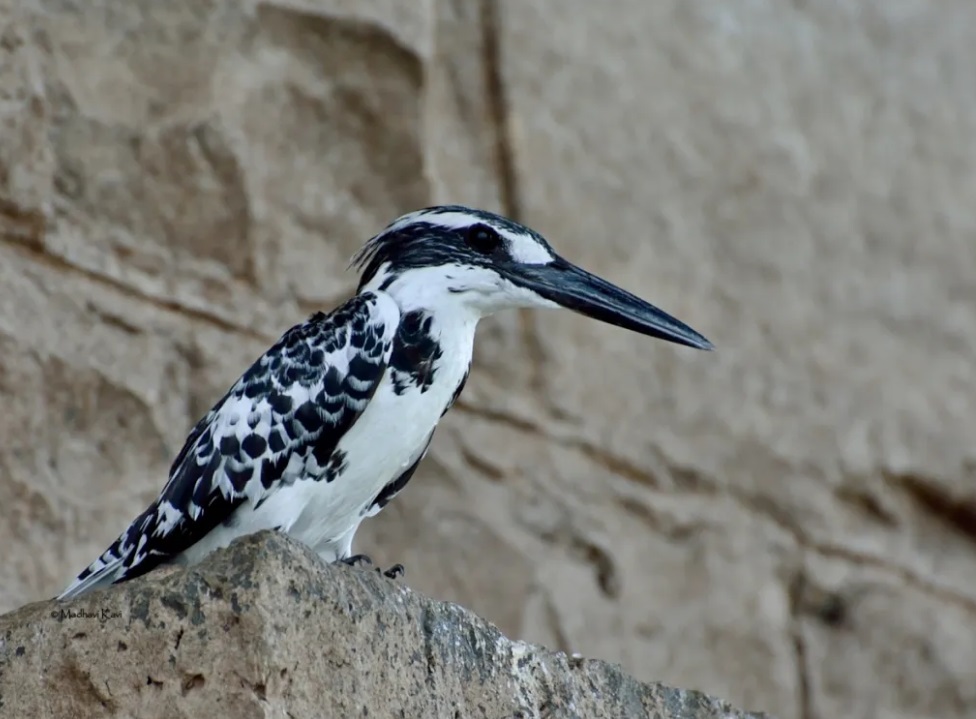
Madam Shailaja mentioned that this river had been once rich with flora and fauna. For example, the Pied Kingfisher (कवड्या in Marathi) is known to hover over the water and with a quick dive catch its fish. But with the present state of water being murky and turbid the pied kingfisher is no longer seen on this river
The same is the case with the River Turn ( नदी सूरय in Marathi) This species has been uplisted to Near Threatened on the basis that increasing human disturbance and dam construction projects are expected to drive a moderately rapid population decline over the next three generations.
To quote one more example is the Pheasant tailed Jacana (कमलपक्षी in Marathi). They are seen on floating vegetation and the nest is usually on a leaf which floats, (mostly lotus leaf). In the absence of such vegetation, this bird is no more seen on the Mutha banks.
The River Tern creating a figure of '7' "Always a treat watching these hunt over the Panshet Dam in Pune" says Anupam who painted this.
The rivers were well taken care of during the previous era. The Kumbharves dam built during the Peshwe era marked the boundary of the then Pune. Later rebuilt by the British, it still stands under the Dengale bridge at Kumbharvada
One way to create awareness is to encourage others to attend these river walks. I have made a short one minute video of the walk I had.
There are some proposals in the pipeline, like this present state near the Shivaji bridge to be transformed into an activity area without disturbing the ecological balance.
Like the saying goes, "we have not inherited this world from our parents, we have borrowed it from our children"
..
I just stood there in awe looking at that root bridge. A
classic example of the symbiotic relation between humans and nature.
This bridge is about 180 years old and it is
over the Thylong river. It is worth mentioning
here that the four major clans, Khongsar, Khongthohrem, Khongliar and the
Nohwet village had a major role to play in the creation of this living root
bridge.You have to go down about 450
steps from the road level to reach the bridge.
The entry fee to visit
the bridge is only ten rupees and it is managed by the Dorbar Shnong
Nohwet.
I noticed that there were volunteers from the
village who kept a watch on the bridge. You can walk across the bridge but stopping
or taking selfies on the bridge is not allowed. You can see one of the tourists
being adamant about clicking a selfie inspite of the volunteer telling him to
get off the bridge.
As seen all over the North East, there are
dust bins provided at every possible corner.
This sign board talks about the dos
and donts.
Looking at it from a different angle, you can see the tree is
supporting itself as well as the bridge.
Sustainable living architecture that will live for generations
to come.
Walking around the river bed I had a closer look at the life
around the river. This guy was waiting for his lunch
While walking down
the steps I heard a lot of chirping sound and finally located one of them. Can’t
believe that this little one could create such a racket.
Clicked one more picture from further down the river.
Traveling is boring for some and it is all the more so when its a daily routine - namely going to work. Continuing with the journey . .
. . . . there is a broken culvert that we pass daily and the activity
over there is any body’s guess. As the water over here is fresh and flowing,
you get to see a lot of activity.
It could be a driver, who after
having a bath washes his auto rickshaw
Or it could be someone cleaning
his scooter
Sometimes the vehicles carrying
the green leafy vegetables make a stop over to wash their bunch of palak and
methi (spinach and fenugreek), or it could be a physically challenged man
who after having a bath , washes his clothes and hangs them out to dry.
The National War Memorial has
undergone a face lift recently.
It is a pleasant sight to see
the well manicured lawns with the names of the soldiers neatly listed down
The flag staff too has been
changed to a longer one with a bigger flag. On the way back from work we get to
see the flag being lowered with reverence. A procedure followed religiously
before sunset.
Next to this War Memorial is a
clock tower which rings at every hour. I was pleasantly surprised to hear the
ring of the Big Ben when I was passing this tower exactly at 18:00 hrs.
Those who want to know a little
more about the Big Ben and its history, have a look at this video here.
Some interesting facts are given there.
Every city in India with a
military establishment has an RSI and Pune is one of them.
There is this institute
“Botanical Survey of India” with huge trees and a good mansion inside
(from the British era). One day I must make it a point to visit and explore
this place.
Pune has two rivers and I cross
them six times in a day - thrice in the morning and thrice in the evening. In
case you are wondering about it, here is a rough layout of how the river winds
itself through the city.
The Fitzgerald
bridge (commonly known as the Yerwada bridge or bund garden bridge) was wide
and strong and it had a bund close to it. Its interesting to know that this
bund was financed by Sir Jamsetji Jeejeebhoy and was named as Jamsetji Bund. It
was created in 1853 to provide water for the poorer citizens of the city.
The above picture shows the
bund. It was clicked by an unknown photographer way back in 1870
Now the bund has been demolished
to create new bridges on either side.The Fitzgerald bridge still stands with a
deserted look. There is a move to make it a walking plaza. I tried to
click a picture from the same point and you can see the new bridge in place of
the bund.
Many Bollywood pictures were
shot on this bund including the famous song sequence “aaja aayi bahaar…” from
the movie Raajkumar starring Shammi Kapoor and Sadhana.
From the bridge you can see the
Tarakeshwar mandir on the hillock.
Below the bridge you can see a
make shift dhobi ghat. It has been there for years, maybe due to the easy
access to running water.
Before we move on from the
BundGardenBridge,
lets have a look at how it looked in 1917. Here is a picture I came across
which says:
Poona,
India.
1917. Members of the 1st Australian Wireless Signal Squadron,
Mesopotamian Expeditionary Force, relax in the gardens while on leave. They
were possibly members of the Squadron Headquarters (HQS) or ‘A’ Station.
You can see the Fitzgerald
bridge behind.
Along the curved road to the
Bombay Sappers you get to see a temple and a durgah co-existing with each
other.
The view from inside the Kaila
Chamunda mata mandir is great and one can see the flowing Mulla river from the
window.
When ever there is a festivity
in the Hajrat Shahdaval Baba Durgah you can see extra stalls coming up outside
with some colourful items for sale.
It’s a common sight to see the
young recruits crossing the road at the Bombay Sappers (which was earlier known
as the BEG) This edifice (made with coloured tiles) looks great from far.
I was just counting the number
of pictures in this post and I think it has crossed my self imposed rule of
“keep it short and sweet”