This is the second time that I have been to Bhigwan and being unlucky with flamingo sightings. But then the other birds made up for the loss. I am sure the one on the right is an Ibis.
This pond heron was on a tree. He did a wonderful display of sweeping down into the water to catch a fish and come back to the same spot to display his catch. Did he put on a show knowing that I was filming him or was this his daily routine of having breakfast?
The yellow wagtail was busy running after the small insects.
While witing for our boat, I was observing the birds on the far off trees.
It is interesting to see how they glide down and settle on a boulder so that thy have a better vantage point to spot the fish.
If you have the patience, you can catch these birds in action. I was trying to capture this lady to show that the daily chores around the area goes on, when I saw a bird behind her tossing a fish.
I like the black band over the eye of the green bee eater. (reminded me of Zorro) Their breeding season is from March to June and they nest in hollows in vertical mud banks.
These little cormorants were fishing in groups. It is a wonderful sight to see them take off together and land at a different place for the next catch.
Apparently a flock of Cormorants is known as a "Gulp".
.
One thing I noticed about the birds is that they never squabble about the catch. There seems to be an unwritten rule among themselves "you caught it, you eat it".
Spotting a Spoonbill in the crowd was easy with the spatulate shape of their beak. While reading about them the feature that struck me was that the primary cause of their brood failure was not predation but starvation.
Not sure about this bird, but I think this is the Eurasian Coot (Warkari)
The painted stork stands out pretty tall among the lot.
Here she stands with her knees bend and that gives you an idea of the length of her beak.
A closer look at the formation of her feathers and its colours.
All these birds were pretty close to our boat and they were quite comfortable about it.
The Pied Bushchat had a unique call of her own. They say that a bird shot is perfect if you can see the white dot in the eye.
All these birds were found in the backwaters of Ujani Dam (Bhima Dam).
A game sanctuary is not far from this place and we were lucky enough to spot two Chinkaras (Indian Gazelle)
Made a 5 minute video on it.
Took part in a blogging competition at Dreamstime and got the first prize. The
topic given was “How to find great shots while on the road” Reproducing the
blog here.
Great shots happen when you least expect it. So whenever that
inner instinct tells you “this can be a good shot”, just grab the camera and
click.
Rule number one, never click when the vehicle is on the move and
you are driving. It can instead be a good opportunity to take pan shots
(videos) if you are the co driver and the road is smooth. If you are in the car and while taking
photographs, make it a point to roll down the window. A piece of glass in
between your object and the camera reduces the quality of your picture.
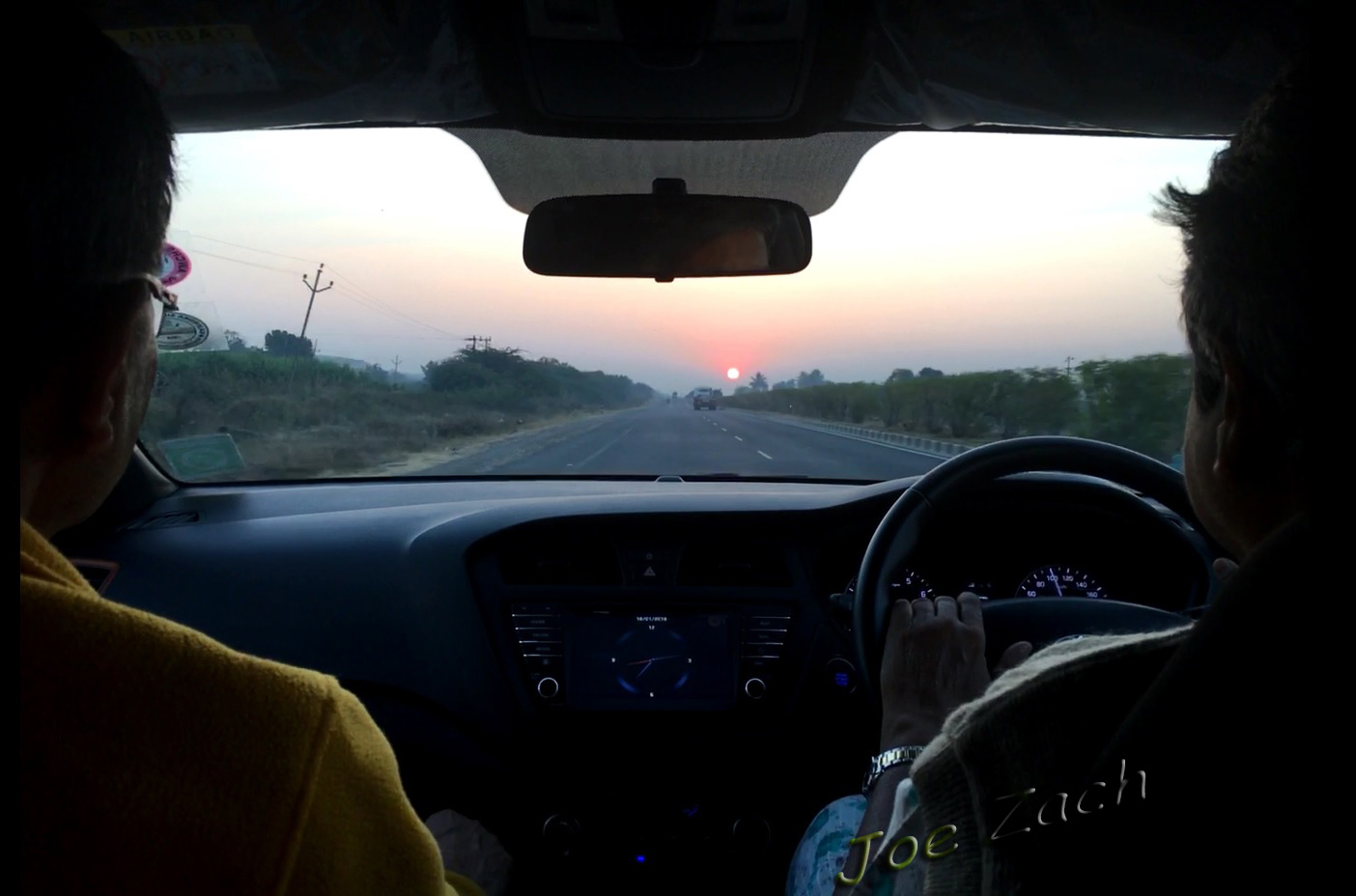
Recently I had been to Bhigwan (in western India) with
my friends to click photos of the Flamingos. On the way I saw an assortment of
birds fishing in the shallow waters and it was perfect against the rising sun.
I requested my friend to pull over for a few minutes and clicked these pictures
On the way back I saw this truck being loaded
with sugarcane. It occurred to me that this could be a good picture to show how
things got transferred from the farm to the factory. The bullock cart added to
the effect. I took the pictures from the car.
Once while travelling in the Nilgiri hills, we
turned a curve. It was a neat perfect curve and I got out of the car to take a
picture. The white lines and the wet road added to the effect.
On the road, does not mean being in a car. I
was in a buggy in Bruges when I saw this lady opening up her flower shop.
Buggies on cobblestones can be very shaky especially when you are trying to
click. Luckily for me the buggy momentarily stopped and I could click this.
Always be on the lookout for something unusual,
like this car I saw in Mumbai, in front of the Taj Hotel. It looked like all
the crows were waiting for the driver to take his seat and start the car so
that they could go for a spin. A rare sight and worth a click. At times like
this you don’t have the time to set up the camera and wait for the perfect
light. You just click before the moment vanishes.
While on long drives, do stop in between to
stretch your legs. And while you relax just look for the smaller creatures that
make this universe spin in a balanced way. They are beautiful and fascinating
to watch and in the process one learns to respect and give space to every
creature on this planet.
It is a nice
feeling to know that you have completed three fourth of the journey before the
sun rises.
Had been to
Bhigwan for bird watching. Being there early had its advantages. I could shoot
some good silhouettes.
You had to point your camera in
any direction and you are sure to catch two or three birds in one frame. Long
beak, short beak, curved beak, gap in between beak. Asian Open bill stork is identified by the gap
in between the beak.
It was just coincidence that the nostrils of this
open bill stork was in line with my camera by which I could see the light
passing through and through.
The
eyes of this Night Heron is very mesmerizing.
The painted stork breeds on trees either in mixed colonies along with other water birds or by themselves. Here this one has come down for fishing.
The Grey
headed swamphen (Purple swamphen) has an elaborate courtship display holding
water weeds in his bill and bowing to the female with loud chuckles. I noticed that they have huge feet.
Purple swamphen
I saw one of them pulling out a weed. He uses
a lot of energy to pull out that weed which is almost six feet deep underground.
After all the trouble he just leaves it and goes, perhaps not happy with the
roots to be presented to a prospective bride. (you can see it in the video)
The black headed Ibis had its beak open.
It was fun
to see a pair of the Spoonbill wading in the water, hunting for fish.
Spoonbill
Looks like this pair of Black Winged Stilt birds were out for a synchronized walk.
Clicked some
birds sitting on a wire like this Black Drongo and the Pied Bushcat
Black Drongo
Pied Bushcat (male)
Pied Bushcat (female)
The black bandit mask is very prominent in this Bay Backed Shrike.
Bay Backed Shrike
These
wagtails were busy trying to catch some insects in the field. They were agile
and quick. You can see the insects against the rising sun.
Eastern Yellow Wagtail
The green Bee Eater sort of blended well with all the greenery around him.
Green Bee Eater
The Grey Heron scanning the sky line while the black winged stilt trying to locate a fish.
Saw a pair of Ruddy Shelduck (also known as Brahmini Duck) lazing in the water.
The nest of the Glossy Ibis is a platform of twigs and vegetation positioned one to seven meters above water level.
Glossy Ibis
The Painted
Stork kept walking, meeting new friends along the way. While wading, he stirs the bottom with one leg, while the beak is ready to catch the
fish.
The
bullock carts were busy going into the fields to pick up the sugar cane
These are later transferred to the tractors or trucks.
Each tractor had a
good sound system with huge speakers on either side. So you can hear a variety
of songs blaring out when you pass a convoy of tractors.
People usually
go to Bhigwan to see Flamingos but as per this local guide none of them made a landing
as the water level was too high.
The local fishermen made the most of it by using their boats to catch fish.
The exact location where I clicked these pictures.