The ferry from Port Blair to Havelock Island was a pleasant one
We stayed at Dolphin Resort at Havelock Island and I must say it was
perfect for the view and the location.
Run by the government, it was neat and clean with some good staff.
The rates too were reasonable when compared to similar accommodation in the
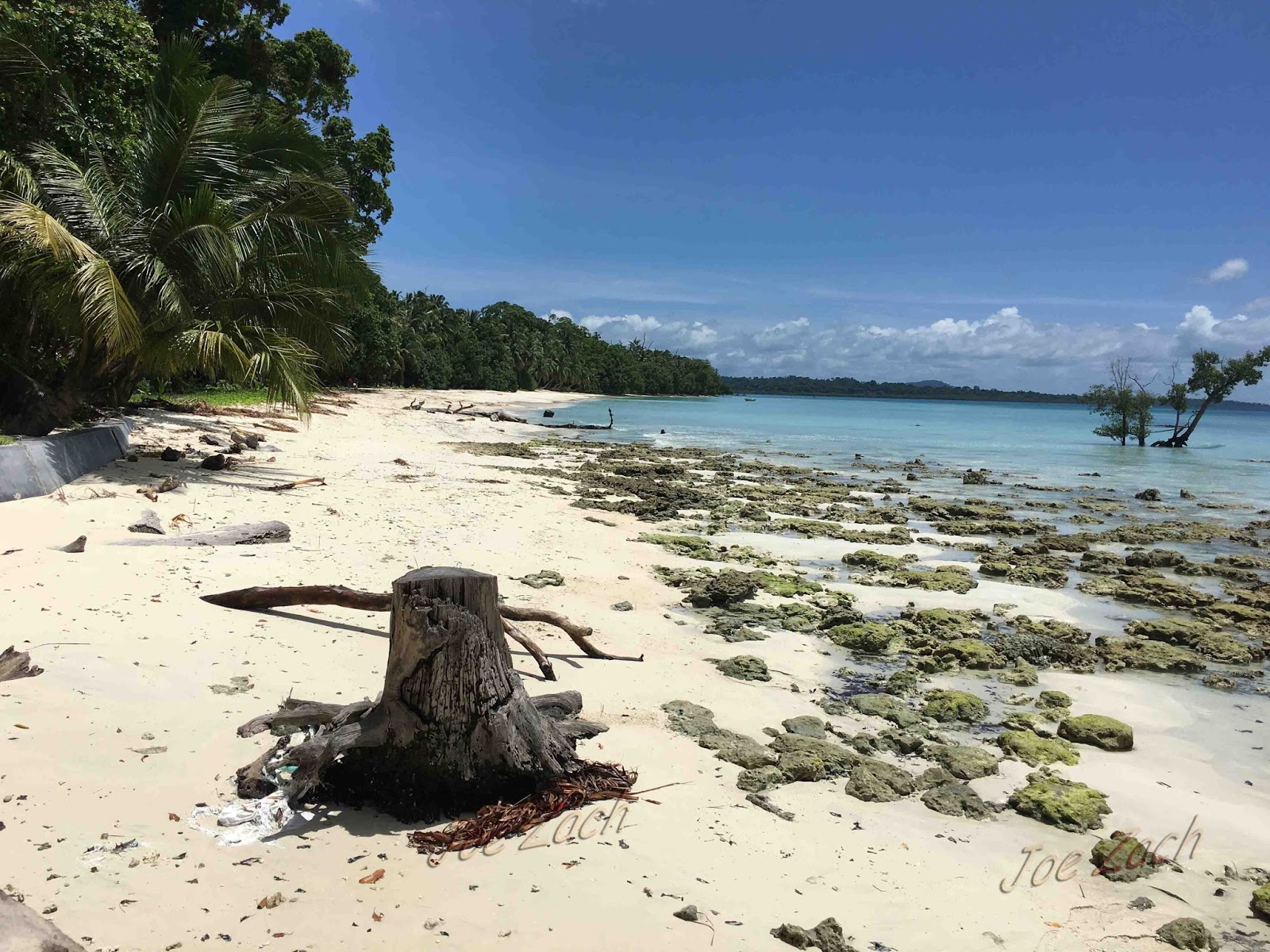
vicinity. When we checked in, it was low tide and that gave us some opportunity
to explore the beach.
I liked the general ambiance and layout of the place. This tastefully
lighted swing is one example
As Andamans is in the far east, the sun rises before 5 am and sets
around 6 pm (compared to IST) So it’s a good reason to get up early to catch
the sunrise.
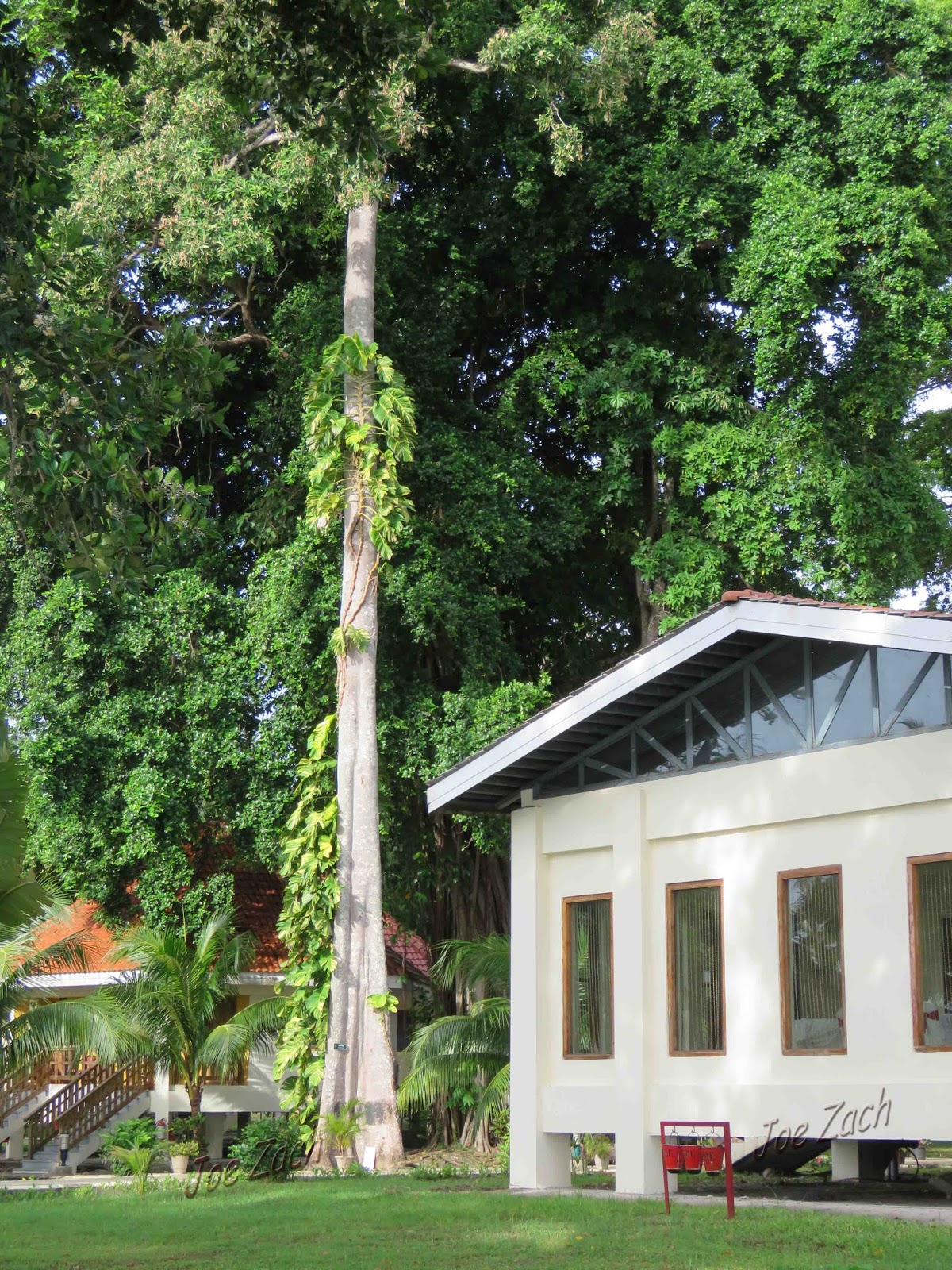
I liked the way they had maintained the huge trees and the landscape,
including labeling the trees.
And with all that greenery around, one can’t miss the birds.
Nearly 105 species and subspecies of birds are endemic to the Andaman
and Nicobar Islands, i.e. not found anywhere else in the world. Some of them
are Nicobar Megapode, Edible Nest Swiftlet and Narcondam Hornbill.
It is intriguing to see them easily hanging on to a wall and building
their nest. They are from the swift family and live in colonies.
They are found in caves, clefts in a cliff, or sometimes even in the
nooks of buildings. The nest is made from layers of solidified saliva. These
nests are later used by humans to make bird’s nest soup. (hence the name Edible
Nest Swiftlet) The Chinese believe that it promotes goodhealth, especially for the skin. The nests have been in Chinese
cooking for over 400 years. Was fascinated by this common sparrow (not so common now a days in the cities)
Noticed many two wheelers with the yellow number plate. They were available on hire - a good way to commute within an island.
The Radhanagar beach is not far off from this place (about 10 minutes
drive)
This beach is clean and good but as it is famous, the beach is a bit
crowded.
It would be advisable to avoid the eating outlet by the name of The
Mohwa at Radhanagar beach.
The food was not palatable and things were
overpriced.
I walked for some distance on the beach and got this shot nicely
framed.
While I was admiring the blue waters a couple decided to take in the view. I clicked once
more from the same spot. Now comparing both the pics I think the second one gives more life to the
picture.
Even though we were in the Andamans right in the middle of monsoon,
we were lucky enough to get abundant sunshine throughout the week (with
intermittent rain in the night)
The early morning view from our window was just magnificent.
There was this little bird who always took his morning walk religiously.
I noticed that he was very shy and scooted off at the slightest sound of anyone
approaching.
Left Port Blair to see the Baratang limestone caves. But the
interesting part is how you reach there. After an hour’s drive from Port Blair,
there is a check point where all the vehicles have to stop. As we are entering
the Jarawa territory all vehicles will have to move in a convoy. The convoy
proceed at fixed times with a periodic interval of 3 hrs. (only during day time)
We were all set for the 9.00 am convoy.
All have to carry photo ids and a detailed form has to be filled up
with the detail of passenger in each car. While that was being done by our
driver we had real hot puri bhaji at these stalls
While writing this blog, I did some reading on the Jarawa.
Some
interesting facts:
They left Africa 70000 years ago. The most ancient people in the
world.
The existence of the Jarawa has been recorded in the diaries of Lt
Col Broke (1789-90) and Blair (1889-96)
Originally not as hostile towards the settlements, the Jarawa became
aggressive when the British befriended the other tribes, apparently their
enemies.
The Jarawas underwent another phase of unequal conflict with the
outsiders, when during the period of Japanese occupation from 1942-45 their
areas were bombed from the air.
Between 1946 and 1961 there were 76 encounters with the Jarawa in
which 15 settlers and “many” Jarawa were killed.
The next phase started in the 1960s with the laying of the Andaman
Trunk road through the Jarawa territory began. The tribals resisted the project
from the beginning and the government was adamant to get it done. There were
skirmishes and ambushes and no one knows the number of casualties on both
sides. Here is a picture of the Jarawa exhibited at the Naval Marine Museum.
One evening a Jarawa boy called ‘Enmey’ fell into a ditch while
collecting bananas from a village house in Kadamtala area adjacent to the
Jarawa reserve. The boy was injured and rescued by the local police. He was
sent to Port Blair for treatment. During his convalescence, he became friendly
with the doctors, nurses and the attendants. He started taking cooked food and
even picked up a few words in Hindi. The anthropologists and the tribal welfare
department dealing with the Jarawa also interacted with the boy and gradually a
good rapport developed between the boy and them. The Jarawa community was full
of gratitude when he finally rejoined them. This helped in furthering contacts
with the whole Jarawa community. Though the Jarawa continued to remain aloof
they have, over time, come to accept the presence of civilized world in their
reserve as non threatening and also allow occasional interaction with the
officials of Andaman and Nicobar administration. In the photograph, Enmey is
seen posing proudly with his family.
As photography was strictly prohibited, I did not click till we
reached the other end. But it was a wonderful drive through the tropical rain forest
of Jarawa land. We did see a few young Jarawa boys on the way in the morning.
On our return trip in the evening we saw more of them especially one extended
family standing at the side of the road. In a way I felt sad as it looked as if
they were expecting something, maybe some gift or food from the passerby. Maybe
that was happening on a daily basis as the escort (police) was only at the
start and end of the convoy. Here is a video on YouTube by Alexandre Dereims which will give you
some idea of Jarawa and what they have to say.
This two hour drive gets you to a place called Middle Straight where
a government ferry takes you across to Baratang. While on the ferry you can
take in the lovely greenery just kissing the waters.
From there you hire a speed boat which takes you to Baratang
limestone caves. Again the identity card, paper works etc. (it costs Rs 450/-
per head for the speedboat) We were in the boat named Sanjana
The outboard really zips you through the mangrove forests. We did see
an alligator basking in the sun but the boat was too fast for me to click. As
you near your destination the boat slows down and you wind your way through the
smaller lanes of the mangroves. It’s a wonderful sight and one is reminded
about the movie “Black Water”
Some information regarding the roots
You get off the speed boat near the mangroves and walk. It’s a good
trek for about 2 kms with tall trees and lush greenery all around you.
If you slow down the pace and look closely you can see some finer
things like a cobweb or the tiny leaves growing on the stones.
The path twists and turns till you reach the limestone caves.
You get to see more stalactites than stalagmites. It is a good place
for people who are interested in geology.
I would advice tourists visiting the caves to carry a powerful torch.
Walking shoes is an added advantage for the trek.
I always felt that a tree will have many stories to tell (if it could
speak) Here is one tree who has witnessed an important part of the Indian
history even though being 1200 kms away from the Indian mainland.
I am talking about the lone Peepal tree standing in the courtyard of
the Cellular jail
It was uprooted in the storm of June 1998, replanted, nurtured and
survived to tell the tale of life in the cellular jail. There is a light and
sound show held every evening, and most of the story is said by this tree
(actor Om Puri has lend his voice) You can hear him in the video. Two wings of the jail is lighted up which
transforms it from this
To this
The sound system is good and the show could improve by cutting out
the patriotic songs and giving more emphasis on history. Maybe some sort of
visual projection would enhance the show.
The jail had seven wings. Here is a model of how it used to look
663 cells in the jail were specially built for solitary confinement.
Each cell was sealed off by iron grill door and a grilled ventilator.
Among the exhibits, there are two photographs showing the progress of
the construction.
A unique feature of the jail was the total absence of communication
between the prisoners of two wings since the front of one wing faced the back
of the other.
A single guard on duty could supervise all the seven wings from his
vantage point from the central tower.
A view
of the open sea from the terrace
Among the inmates was Vinayak
Damodar Savarkar (the Port Blair Airport is named after him) In March 1868,
238 prisoners tried to escape. Within a month all were caught and 87 of them were
ordered to be hanged.
One of the three nooses and the actual trap door marked in white.
Also noticed that about 70% of the inmates incarcerated there were from Bengal. This is just one of the slabs put up there.
Incidentally only three wings of the seven stands as of now. It would
have been only one, had it not been for a letter written by Mrs Indira Gandhi to
the Home Minister in Sep 1968 (I saw this entry in the visitor’s book)
The Japanese occupied the islands for three years during World War II
One of the tower bolts in the exhibit room (typically from the
British era)